Your baby’s bottle-feeding setup requires just three essential categories. You’ll need bottles with age-appropriate nipples—starting with slow-flow for newborns and progressing as your baby’s sucking strengthens. Stock at least eight burp cloths and six bibs in absorbent fabrics like bamboo or cotton terry for constant rotation between washes. Create a dedicated cleaning station with a small basin, bottle brush, and drying rack near your feeding area. These basics handle every feeding challenge from newborn through weaning stages.
Key Takeaways
- Start with BPA-free plastic bottles, slow-flow nipples, and at least eight absorbent burp cloths for a complete basic feeding setup.
- Choose plastic bottles for lightweight durability, progressing through nipple flow rates (0-4) as baby’s sucking strength develops.
- Stock eight burp cloths minimum in terry or bamboo fabric, at least 20 inches long for shoulder-to-waist protection.
- Set up a dedicated cleaning station with basin, bottle brush, and drying rack near the feeding area.
- Replace nipples every two to three months and watch for feeding frustration to indicate flow rate changes.
The Essential Bottle and Nipple System
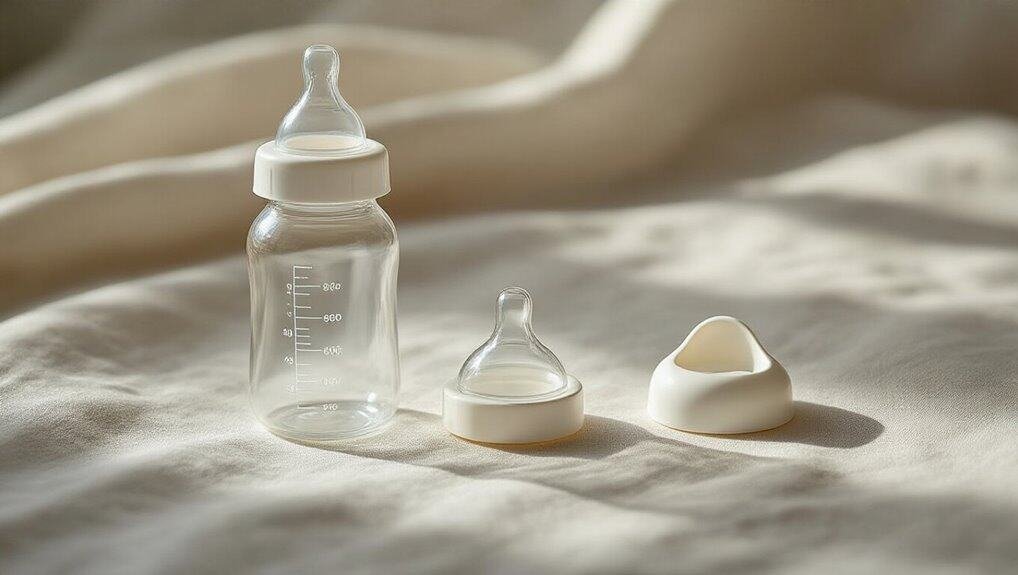
When you’re standing in the baby aisle staring at dozens of bottle options, you’ll quickly realize that choosing the right feeding system involves more than grabbing the first cute design you see.
You’ll need to consider bottle materials first. Glass bottles won’t leach chemicals and clean easily, but they’re heavier and breakable. BPA-free plastic bottles are lightweight and shatterproof, making them ideal for travel and self-feeding. Stainless steel offers durability without chemical concerns but can’t show milk levels.
Nipple flow rates determine feeding success. Start with slow-flow nipples for newborns to prevent choking and gas. You’ll progress through medium and fast flows as your baby develops stronger sucking abilities. Watch for frustration signs during feeding—they indicate it’s time to increase flow.
Most manufacturers number their nipples (0-4) corresponding to age ranges. Buy multiple nipples in each size you’re using since they’ll wear out every two to three months.

Multi-Purpose Burp Cloths and Bibs
Most parents underestimate how many burp cloths and bibs they’ll actually need until they’re drowning in laundry during week two.
You’ll want at least eight burp cloths and six bibs in your rotation to maintain sanity between wash cycles.
Choose burp cloths made from organic fabrics like bamboo or cotton terry.
They’re more absorbent than synthetic alternatives and gentler against your baby’s sensitive skin.
Look for generous sizing—at least 20 inches long—to protect your clothes from shoulder to waist.

For bibs, invest in styles with waterproof layers sandwiched between soft fabric.
This three-layer construction prevents milk and formula from soaking through to your baby’s clothes.
Adjustable snaps beat velcro, which loses grip after repeated washing.
Don’t waste money on decorative options.
You need workhorses that’ll survive daily abuse and frequent hot-water washes.
Stick with white or light colors that you can bleach when stains inevitably set in.
Streamlined Cleaning and Storage Solutions
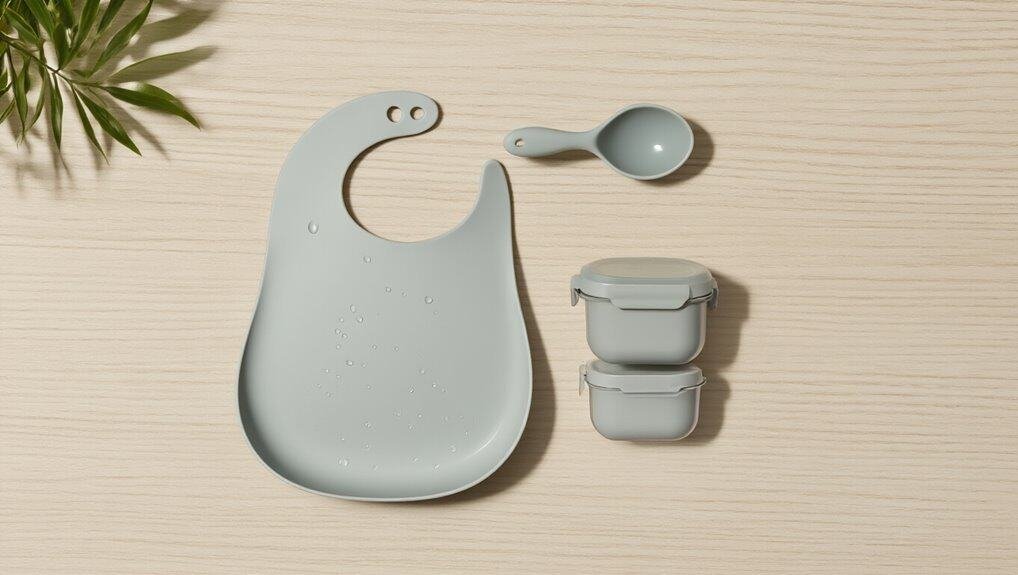
Setting up an efficient cleaning station near your feeding area cuts down on the endless trips to the kitchen sink. You’ll need a small basin for soaking bottles, a dedicated bottle brush, and quick dry towels that won’t harbor bacteria. Mount space saving organizers on nearby walls to hold these essentials within arm’s reach.
Store clean bottles upside down on a drying rack that doubles as storage. This prevents dust accumulation and keeps everything sanitized until the next feeding. Choose collapsible racks that fold flat when you’re not using them.
Create zones in your kitchen cabinets: one for clean items, another for items awaiting washing. Use drawer dividers to separate nipples, caps, and rings. Label each section so caregivers can quickly locate what they need. Keep your dishwasher basket specifically for bottle parts on the counter during heavy feeding periods. This system eliminates confusion and maintains hygiene standards.
Frequently Asked Questions
When Should I Transition From Bottles to Sippy Cups?
You’ll typically transition between 6-12 months when your baby can sit independently.
Start by offering water in a sippy cup during meals while maintaining regular bottle feedings.
Introduce straw cup options around 9 months since they’re better for oral development than traditional sippy spouts.
Replace one bottle feeding at a time, beginning with midday sessions.
Most pediatricians recommend completing the transition by 18 months to prevent dental issues and dependency.
How Much Should My Baby Be Eating at Each Feeding?
Your baby’s portion sizes depend on age, weight gain patterns, and individual feeding cues.
Newborns typically consume 1-3 ounces per feeding, increasing to 4-8 ounces by six months.
Watch for hunger signals like rooting and fullness signs like turning away.
Track steady weight gain with your pediatrician.
Whether you’re using scheduled feeds or on-demand feeding, let your baby’s appetite guide amounts—they’ll stop when satisfied.
What’s the Difference Between Slow, Medium, and Fast Flow Nipples?
Slow, medium, and fast flow nipples differ in their flow rates through varying hole sizes.
You’ll start with slow nipples for newborns who need time to coordinate sucking and swallowing.
Around 3-4 months, you’ll switch to medium nipple sizes as your baby’s feeding skills improve.
Fast flow works for older babies who get frustrated with slower rates.
Watch for signs like gulping, choking, or lengthy feeds to determine when you should change.
How Do I Know if My Baby Has a Tongue Tie Affecting Feeding?
You’ll notice tongue tie signs when your baby’s restricted tongue prevents proper latching, causing clicking sounds, frequent feeding breaks, or poor weight gain.
Check if they can’t extend their tongue past their lower lip or if it appears heart-shaped when crying.
Watch feeding cues like frustration, falling asleep quickly, or milk leaking from their mouth.
If you’re experiencing nipple pain or your baby seems constantly hungry, consult your pediatrician immediately.
Can I Mix Breast Milk and Formula in the Same Bottle?
Yes, you can mix breast milk and formula in the same bottle, but you’ll need to follow specific mixing order and storage guidelines.
First, prepare the formula with water according to package directions, then add your expressed breast milk. Never use breast milk instead of water to mix powdered formula.
Once combined, use the mixture within one hour at room temperature or 24 hours if refrigerated immediately.
Conclusion
You’ve now got the blueprint for a streamlined feeding setup that’ll serve you from newborn days through toddlerhood. These three categories—your bottle system, absorbent textiles, and cleaning gear—form the backbone of efficient feeding routines. Don’t overcomplicate things with unnecessary gadgets. Start with quality basics, master their use, and add specialized items only when you’ve identified specific needs. This minimalist approach saves money, reduces clutter, and makes every feeding session more manageable.